
A line of our own drawing
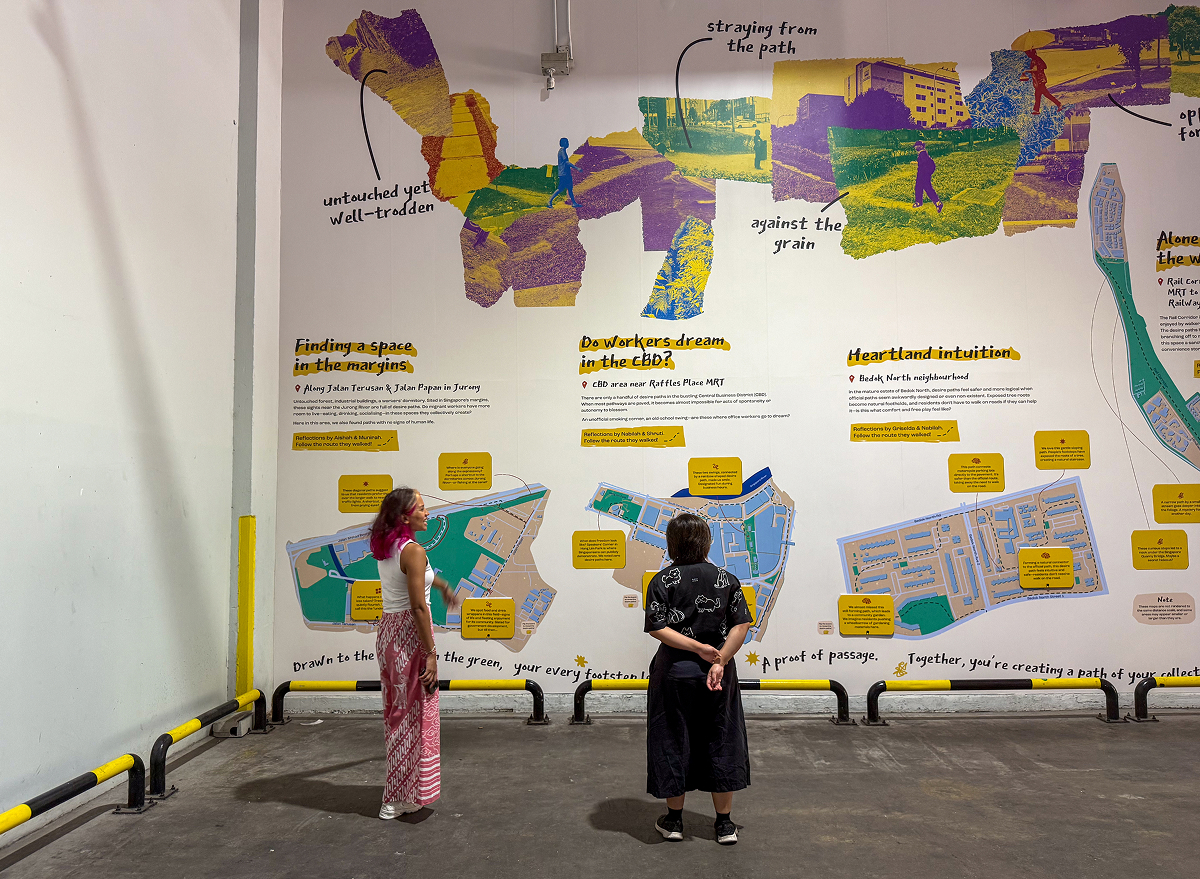
An 8 by 12 metre print infographic on desire paths in Singapore, commissioned by The Everyday Museum of the Singapore Art Museum.
Singapore Art Museum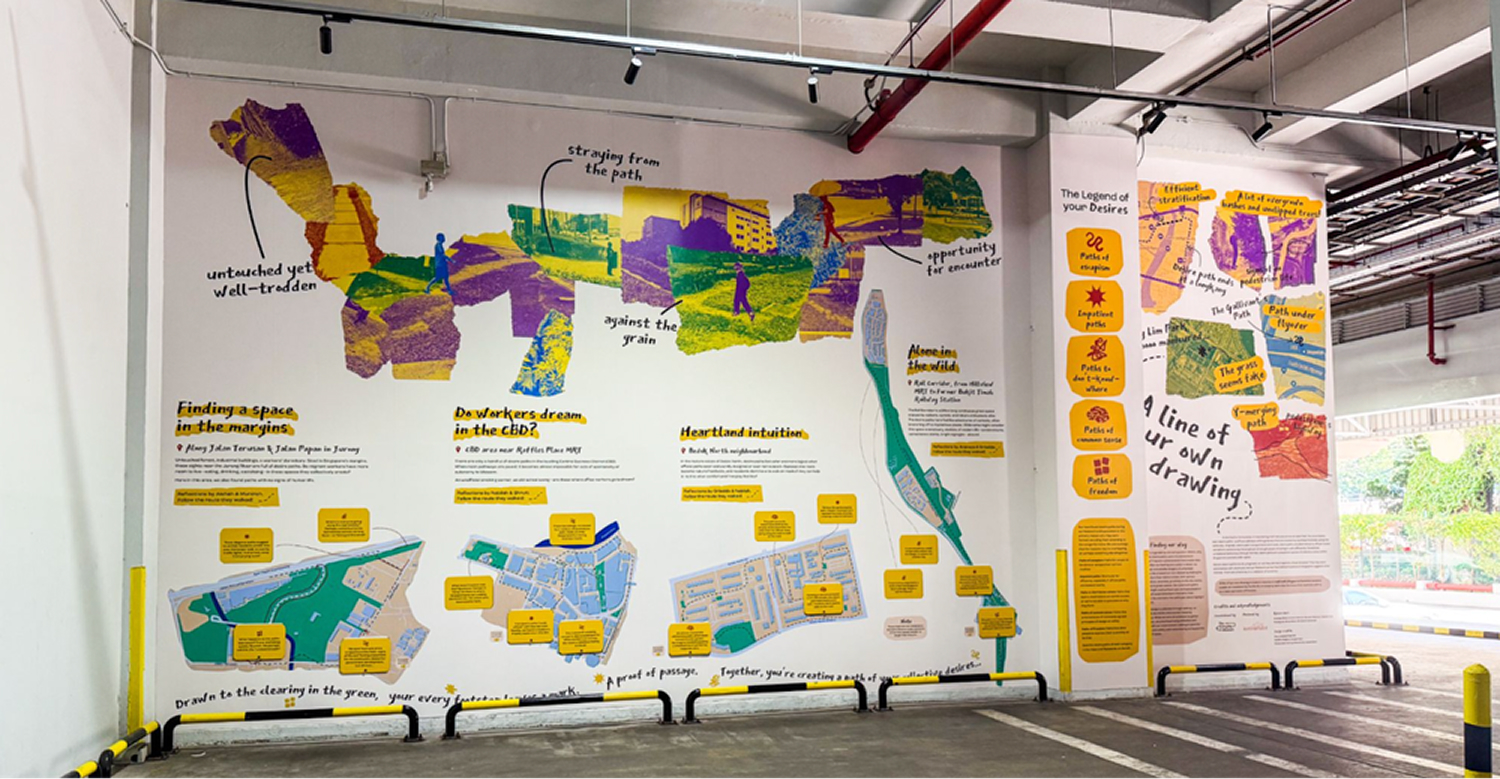
Partner:
Singapore Art MuseumProject type:
Infographic
Scope:
Editorial writingData visualisation
Social media
Research
About the project
The challenge
Making data out of something unmapped
A data piece that had to work as art
Our creative solution
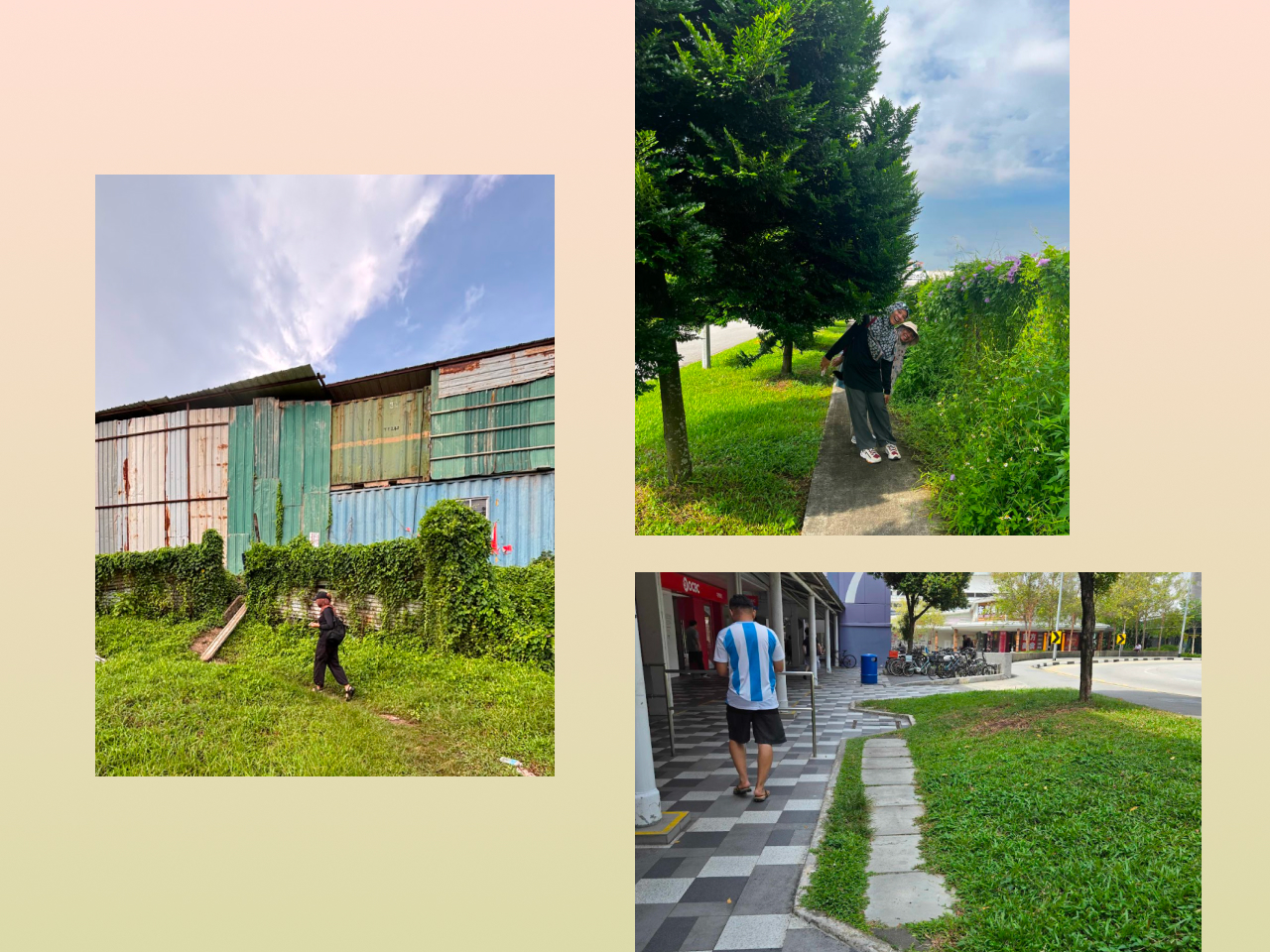
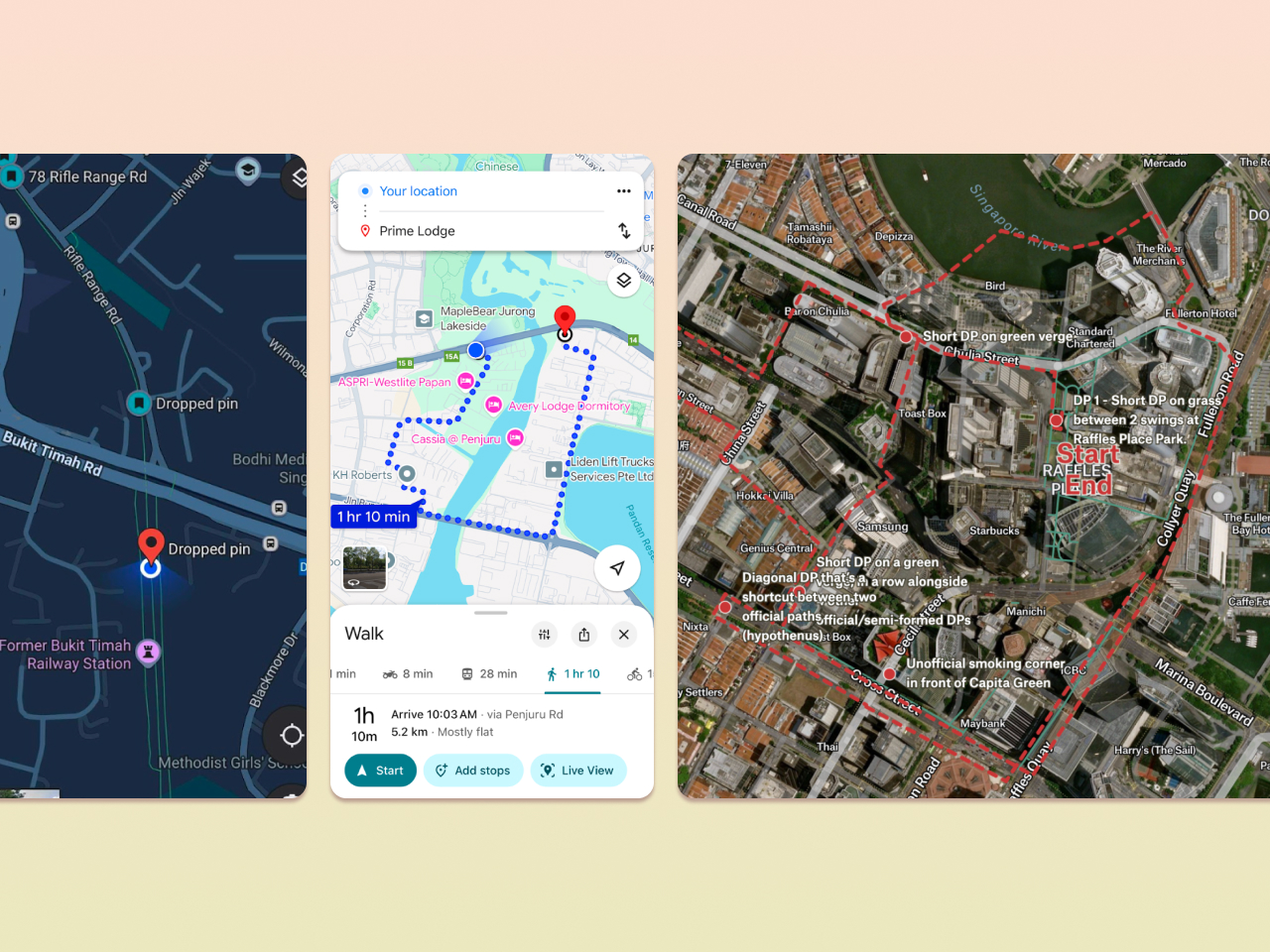
We built the data through fieldwork. Six team members based in Singapore walked four districts over two weeks: Bedok North in the residential heartlands, the Central Business District, the Railway Corridor, and the industrial stretch around Jalan Terusan. Each site was chosen for its distinct character. Before walking, we agreed on a shared observation framework so the documentation could be compared across sites, but left the methods of recording open. Some of us used Strava, some Google Street View, some notebooks, some photos. A shared Felt map let us annotate paths as we found them.
From the fieldwork, we grouped the paths we found into five categories based on the behaviours they seemed to reflect: paths of escapism, impatient paths, paths to don't-know-where, paths of common sense, and paths of freedom. Some categories confirmed our hypotheses. Others surprised us. In Bedok North, we found "paths of common sense" that were more practical than the official routes, suggesting residents were filling gaps in planning rather than acting against it.
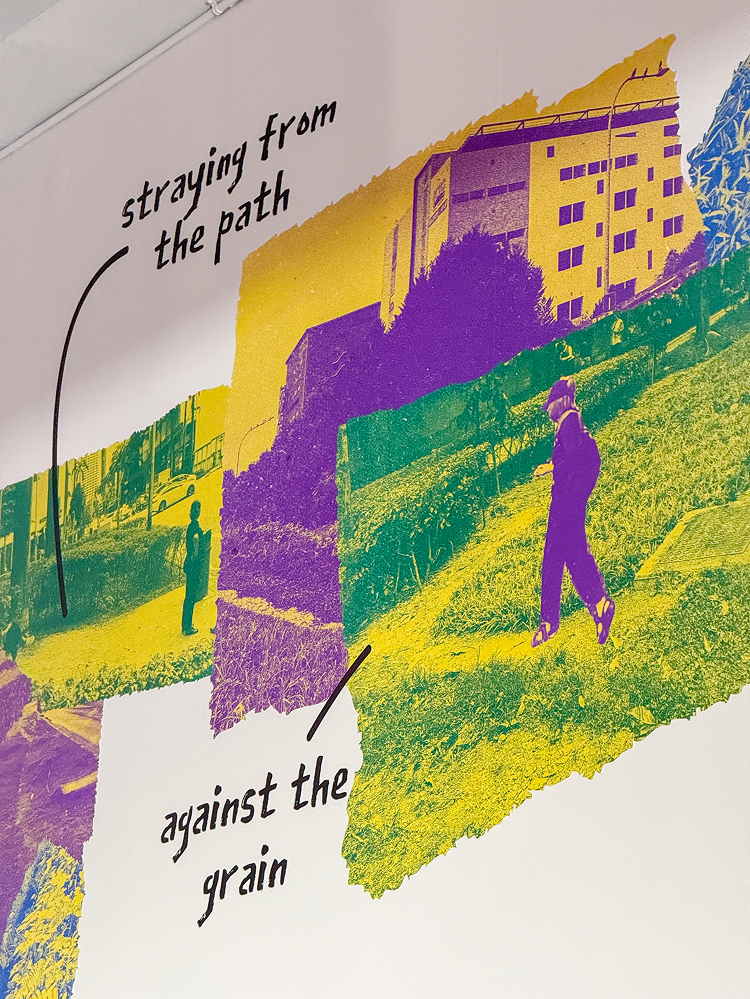
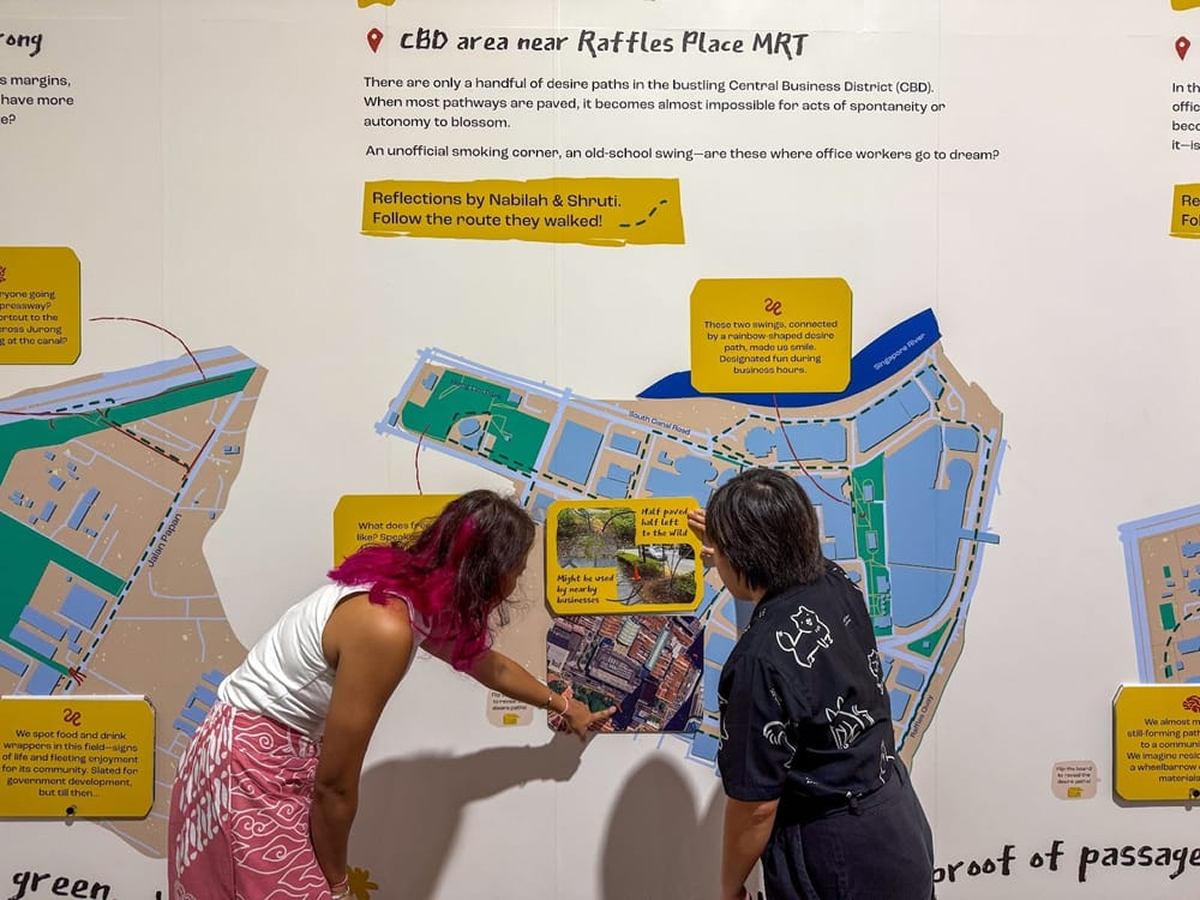
For the art direction, we moved away from the clean language of commercial infographics. The final piece uses a sketchy, dynamic, and colourful style inspired by scrapbooks and travel journals. Maps and photographs of the paths are interspersed with the team's reflections and speculations, so the work reads as a record of a group walking and thinking together rather than a neutral overview. We added flipboards to a few selected paths, which visitors can open to see photos and satellite images, and use to find the paths themselves.
Our partners
You’ve done the work. Now let us make it exceptional.